
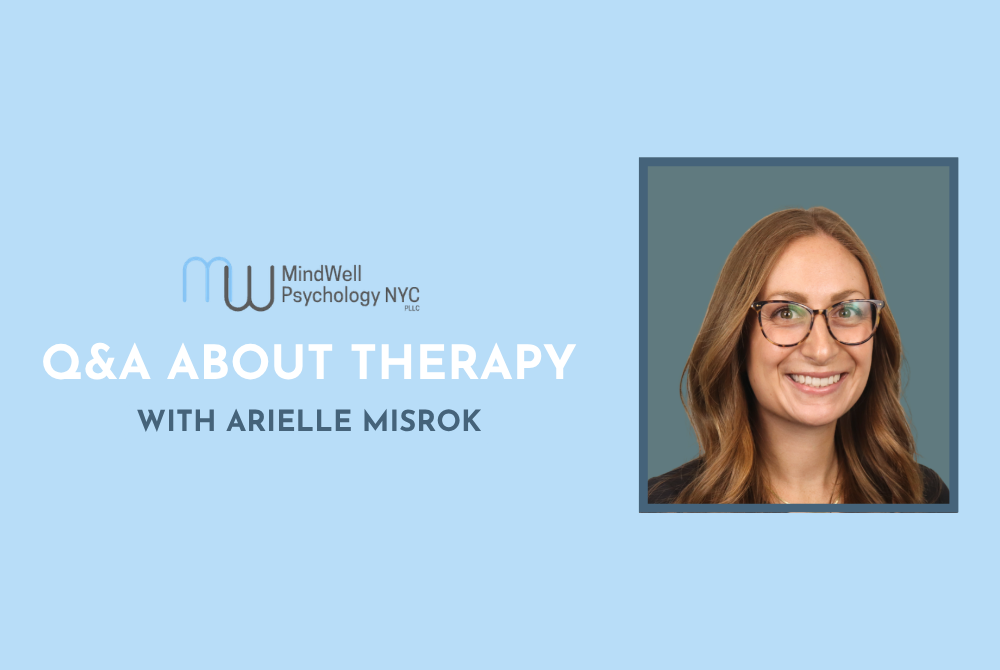
Therapy isn’t just about coping—it’s about feeling safe, understood, and empowered to navigate life on your own terms. In this Q&A, MindWell NYC therapist Arielle Misrok shares how she creates affirming spaces, makes DBT practical, and supports clients through some of life’s most transitional stages.
What does creating safety for LGBTQ+ clients look like in your sessions?
Answer:
I believe that the foundation for safety in therapy is built on not just physical safety, but emotional safety as well. To me, this means fostering an environment where my clients can show up as themselves, speak their mind, feel their emotions, and try new things without fear of judgement.
How do you show up as an affirming therapist, not just a knowledgeable one?
Answer:
Being an affirming therapist means not just affirming aspects of a client’s identity, but affirming their own wisdom, capabilities, and perspectives. It also means advocating for my clients, naming and committing to working against very real systemic injustices, and not pathologizing them for normative behavior or preferences just because they exist outside of societal or community norms. I often remind my clients that while I’m knowledgeable about treatment, they are the experts on themselves. When we work together and learn from each other, we can create lasting change.
How do you balance skills with emotional support?
Answer:
This is a constant balancing act. I work hard to really get to know my clients so I can provide emotional support that actually lands. With that shared understanding as the foundation of our work, skills become more effective and feel less like putting a band-aid on a wound.
What’s one DBT skill you use in your own life?
Answer:
Accumulating positives in the short term. Whether it’s going for a walk, trying a new coffee shop, playing volleyball, hearing live music, or planning my next trip, I try to incorporate at least five minutes a day of pleasant activities to help increase my emotional resilience.
How do you make DBT feel practical instead of clinical?
Answer:
The practicality of DBT is actually one of my favorite aspects of the treatment. I stay closely tuned into my clients’ goals and, instead of just “teaching” DBT, I often ask how we can use these tools to help them reach those goals. When appropriate, I also share how I use DBT skills in my own life. I believe this helps bridge the gap between what DBT looks like in theory versus in practice.
What do you hope clients get from DBT beyond symptom relief?
Answer:
A supervisor once told me that DBT won’t solve all of our problems, but it will give us the tools to deal with whatever life throws at us—and that has always stuck with me. My hope is that DBT not only helps clients relieve their current symptoms, but also builds confidence in their ability to handle future challenges. I also hope clients leave feeling more connected to themselves, with a clearer understanding of who they are, where they came from, and where they want to go.
What do you notice most about this stage of life?
Answer:
There is so much change happening. Teens and young adults are balancing new levels of independence while still relying on their support systems in some capacity. It can feel destabilizing and confusing—and also exciting. Many clients at this age are not just learning how to navigate responsibilities, but also discovering who they are and what matters most to them.
How do you help clients who feel “behind” compared to others?
Answer:
For many clients, this is the first time they’re not moving through life at the same structured pace as their peers, so comparison can feel especially strong. That sense of being “behind” can show up in school, careers, relationships, and even therapy. My work tends to be values-based—helping clients identify what truly matters to them and build a life around that, rather than using others’ timelines as the measure.
What’s your approach when a client doesn’t know where to start?
Answer:
I remind them that they’ve already started by coming to therapy. Recognizing that you want something in your life to change is the first step. It’s common to feel overwhelmed, especially at the beginning, but we don’t need to fix everything at once or find the “perfect” place to start. Instead, we focus on the next one small step.
How do you build trust with younger clients?
Answer:
By being genuine. Kids and teens are incredibly perceptive—they can tell when someone isn’t truly present or authentic. Showing up as myself (including bad jokes and a little irreverence) helps create a real relationship, where they feel safe, trusting, and comfortable enough to be themselves too.