
By the Clinical Team at MindWell NYC | October 23, 2026
Evidence-based therapy with practical tools and personalized care to help you move forward with clarity and confidence. Meet our therapists.
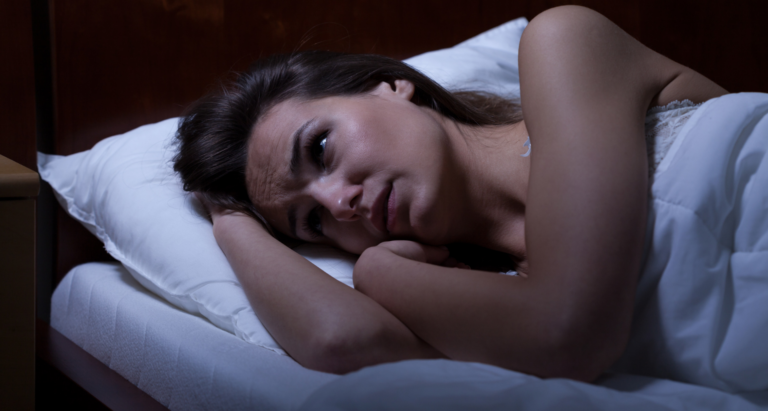
If your baby finally falls asleep and your mind won’t, postpartum anxiety may be keeping your nervous system on high alert. Many new parents find their body stays braced for the next cry or the next thing that could go wrong, even when they’re desperate for rest. This kind of sleeplessness is common and very treatable, and it deserves more support than being told to sleep when the baby sleeps.
Postpartum anxiety keeps the nervous system in a state of vigilance that doesn’t automatically switch off when the baby is down. The result is a body too wired to sleep even when sleep is finally possible. This is distinct from postpartum depression, though the two can overlap. It can start weeks or months after birth, and it tends to get worse at night. It responds well to therapy, and you can get that support from home without arranging childcare.
Postpartum depression is better known, but postpartum anxiety is at least as common and often less recognized. The two can look similar from the outside, and they frequently occur together, but they feel different from the inside.
Postpartum depression tends to involve low mood, emotional numbness, difficulty bonding, a loss of interest in things that used to matter, and a heaviness that makes it hard to function. Postpartum anxiety tends to feel more activated: racing thoughts, constant worry about the baby’s safety, a sense that something bad is about to happen, physical tension, and an inability to rest even when you have the chance. Irritability is common in both.
The sleeplessness associated with postpartum anxiety has a particular quality to it. It isn’t simply that you’re tired and overstimulated. It’s that your body has learned to stay on alert, and it doesn’t know how to come down when the immediate demand pauses. As this guide from UMass Memorial Health on newborn insomnia describes, the sleep disruption new parents experience goes beyond the obvious explanation of the baby waking frequently. The nervous system itself is dysregulated, which is a different problem than just not having enough hours.
If you’re lying awake running through worst-case scenarios, replaying feeding schedules, or monitoring every sound the baby monitor picks up, that’s anxiety doing that, not newborn exhaustion.
Checking once or twice is normal. Checking repeatedly across the night, being unable to settle even after checking, or lying awake watching the monitor for signs of breathing are patterns that go beyond typical new-parent vigilance and into anxiety territory.
The brain’s threat-detection system gets recalibrated during early parenthood. It becomes more sensitive, faster to trigger, and harder to quiet. That recalibration is, in part, functional: it keeps you attuned to your baby’s needs. But for some parents, the system becomes overactivated in a way that starts working against them rather than for them. The checking provides momentary relief but doesn’t actually reassure the nervous system for long, so the cycle repeats.
This pattern is worth naming because it feels like responsible parenting from the inside. It isn’t until it’s significantly disrupting your sleep and your functioning that most people realize it has crossed into something that needs attention.
Yes, and this surprises many people. There’s a cultural assumption that postpartum mental health challenges show up immediately after birth, but postpartum anxiety can emerge or intensify in the weeks and months that follow. Returning to work, stopping breastfeeding, a shift in support from family and friends, or a baby entering a new developmental stage can all be triggering points.
Some parents feel relatively okay in the newborn period when there are people around and a clear structure to follow, then find that anxiety spikes when routines shift or the initial support fades. Others find that the adrenaline of early newborn life carries them through and the anxiety surfaces once things quiet down and there’s more time to think.
If you’re several months postpartum and only now noticing that something feels off, that doesn’t mean what you’re experiencing is less valid or less treatable. It means the timeline for postpartum anxiety is longer than most people expect, and reaching out now is still the right call.
Without support, postpartum anxiety can persist for months or longer. With the right treatment, most people see meaningful improvement within weeks to a few months. The range depends on the severity of symptoms, whether depression is also present, what support is in place at home, and how early someone gets help.
Anxiety that’s caught and addressed early tends to respond faster than anxiety that’s been running for a long time without being named. The sooner you reach out, the shorter the path tends to be. That’s worth knowing because one of the things postpartum anxiety does is generate reasons to delay: the baby comes first, things will probably settle on their own, it’s not bad enough yet to call someone. Those thoughts are part of the condition, not accurate assessments of the timeline.
These strategies won’t resolve postpartum anxiety on their own, but they can make the hours between the baby’s sleep cycles more manageable.
Slow your exhale. Breathing out longer than you breathe in signals to the nervous system that the threat has passed. A count of four in and six to eight out activates the parasympathetic system and helps shift your body out of high alert. This is most effective when done for several minutes rather than a few breaths.
Keep the lights low when you tend to the baby at night. Bright light tells your brain it’s time to be awake and alert, which is the opposite of what you need. A dim nightlight for night feeds preserves some of the biological conditions for sleep.
Resist the urge to pick up your phone when you can’t sleep. The combination of blue light and information, especially anything that feeds anxious thoughts, reinforces wakefulness rather than reducing it. If you need something to occupy your mind, audio is generally better than a screen.
If your thoughts are racing, writing them down briefly can help offload them from working memory. A short list of what you’re worried about, set aside on the nightstand, can sometimes quiet the mental loop because your brain has recorded the concern rather than holding it in active memory.
If you’ve been struggling with sleep disruption beyond what’s explained by the baby waking, or if anxiety is making it hard to rest, enjoy time with your baby, or feel present during the day, that’s a reasonable point to reach out. You don’t need to be in crisis to deserve support.
A doctor is a good first call if you’re concerned about whether medication might be appropriate, or if you want a full picture of what physical factors might also be contributing to your sleep. A therapist is the right direction if you want to understand what’s keeping your nervous system on alert and build practical tools to address it. The two aren’t mutually exclusive.
This overview of postpartum anxiety vs. typical new-parent worry can help you sort out where what you’re experiencing falls and whether it crosses the threshold where professional support makes sense.
In most cases, yes. Mental health care is covered under most insurance plans in the same way physical health care is. Postpartum anxiety is a recognized clinical diagnosis, which means it’s billable and typically covered. What you’ll owe depends on your specific plan, your deductible, and whether your provider is in-network.
The most straightforward way to find out is to call the mental health benefits number on the back of your insurance card and ask about coverage for outpatient therapy. Many practices, including MindWell NYC, can also verify your benefits for you before your first appointment so you know what to expect.
Persistent worry about the baby’s safety, inability to sleep even when the baby is sleeping, racing thoughts, physical tension, irritability, a sense of dread that something bad is about to happen, and difficulty being present. Not everyone experiences all of these, and anxiety can also show up as physical symptoms like a racing heart or shortness of breath.
Both can be true at once. Newborn exhaustion is about not having enough opportunity to sleep. Postpartum anxiety keeps you awake even when the opportunity is there. If you lie down when the baby sleeps and your mind immediately fills with worry, replays of the day, or worst-case scenarios, anxiety is likely part of what’s keeping you awake.
Very common. Nighttime tends to amplify anxiety because distractions fall away, the house is quiet, and the mind has more space to fill with worry. For new parents whose nervous systems are already sensitized, night can feel like the hardest stretch. It’s a recognized feature of postpartum anxiety, not a sign that something is uniquely wrong with you.
Yes. Online therapy is just as effective as in-person for anxiety, and for new parents it removes the significant barrier of arranging childcare or leaving the house. MindWell NYC offers online sessions, which means you can meet with a therapist from home while the baby naps, in the evenings, or whenever works for your schedule.
MindWell NYC is a group mental health practice in New York City offering structured, evidence-based therapy for anxiety, including approaches like CBT and DBT. Our clinicians help new parents understand what’s keeping their mind on high alert and build practical tools to rest and feel more like themselves again. With online sessions available, you can get support from home without arranging childcare or leaving your baby.
If you’re lying awake while your baby sleeps, MindWell NYC can help you find calm and reclaim the rest you need. Schedule a free consultation today.