
80 8th Ave #600, New York, NY 10011

Private Practice Consulting

A private practitioner is a licensed professional, such as a clinical psychologist or therapist, who runs their own practice instead of working as an employee of a hospital, agency, or larger company. In therapy, private practice means you set your own caseload, fees, and schedule, and you're also responsible for the business side: licensing, billing, marketing, and operations.

Private practice consulting helps clinicians handle that business side. Virtual consulting with Dr. Jessica Renz, co-founder of MindWell NYC, supports private practitioners at every stage, from deciding whether to open a practice to growing a group practice in New York City or anywhere in the country.
Quick Facts
  • Who it’s for: therapists and mental health clinicians at any stage of private practice, from early planning to established practices
  • Focus areas: launching a private practice, business strategy, practice growth, systems and operations, decision-making, and long-term sustainability
  • Approach: individualized consulting informed by clinical experience, leadership development, and practical business guidance
  • Session format: one-on-one consulting sessions; structure and frequency tailored to individual goals
  • Location & delivery: virtual consulting available nationwide
Private practice consulting for therapists and clinical psychologists in NYC

What does "private practitioner" mean?

A private practitioner is a licensed professional who practices independently rather than as an employee of a hospital, agency, or larger organization. In mental health, private practitioners include clinical psychologists, licensed clinical social workers, licensed mental health counselors, and marriage and family therapists who run their own practice, either solo or as part of a group.

Private practice in therapy means you decide who you see, what you charge, and how your days are structured. It also means you own the business side: licensing and insurance, billing, client intake, marketing, and compliance. That second half is where many talented clinicians feel least prepared, and it’s where private practice consulting comes in.

Do clinical psychologists have private practice?

Yes. Many clinical psychologists work in private practice, either on their own or as part of a group practice. According to Bureau of Labor Statistics data on psychologists, many psychologists run their own practices, while others split their time between private practice and work in hospitals, schools, or agencies.

MindWell NYC is one example. Dr. Jessica Renz is a clinical psychologist who co-founded MindWell in 2017 and built it into a group practice in Manhattan. Today, she uses that experience to help other clinicians build practices of their own.

Dr. Jessica Renz, private practice consultant for therapists in NYC

How can private practice consulting help you launch and grow your career?

If you’re considering starting your own private practice but don’t know where to begin, working with Jessica will empower you to overcome the limitations of your graduate training, manage worries about your potential as an entrepreneur, and ultimately build a practice that matches your skills, interests, and values. Drawing on her extensive experience as a therapist and group practice owner, Jessica will teach you how to apply your clinical skills to a business context, make tough decisions about marketing, hiring, and client satisfaction, and develop resilience in the face of unknowns.

Create, Sustain, and Grow Your Own Group Practice

You don’t need an MBA to run a successful private practice. All it takes is a bit of preparation, some self-education, a reliable support system, and a willingness to tolerate risk and uncertainty. These are things we teach our clients all of the time, and Jessica will help you apply these skills to yourself.

Whether you’re opening your first solo practice or ready to hire your first clinician, consulting with Dr. Renz gives you a clear plan for each stage. Together, you’ll map out your next steps, build systems that support your growth, and make decisions with the confidence of someone who has done it before.

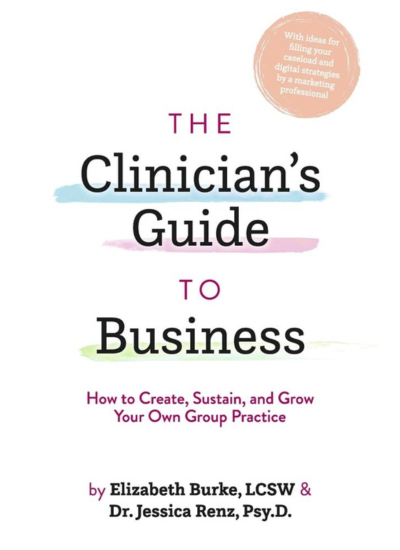
The Clinician's Guide to Business

Work with Dr. Jessica Renz, Psy.D.

Dr. Jessica Renz, Psy.D. is a clinical psychologist at MindWell NYC, a group practice she co-founded in 2017. MindWell has grown exponentially over the years and is now a well-known and respected practice in Manhattan offering behavioral therapy services to clients of all ages.

After publishing a book on private practice growth and management in 2023 called The Clinician’s Guide to Business, Jessica now offers limited spots for consulting to clinicians looking to start or build their private practices in psychology, counseling, or other related fields. The book pairs well with one-on-one consulting for clinicians who want to go deeper on their own.

What does private practice consulting look like at MindWell NYC?

You will hop on an initial call with Jessica (approximately 30 minutes) to discuss your goals and what you are struggling with. Based on where you are in your private practice development, Jessica will tailor a program to work through with you to identify your next steps and get you moving. For example, if you are just getting started or still making a decision about whether or not to open a practice, she will walk you through managing worry thoughts, deciding what kind of practice to open, identifying what you want that to look like, and utilizing your support system to help you move forward more swiftly.

If you are running a practice already and have specific challenges you would like to target (for example: hiring, staff or physical location expansion, client satisfaction, tackling administrative tasks while running a clinical practice, deciding what direction to take your business, relational challenges), Jessica will provide you with a plan to address these problems directly and apply the clinical skills needed to help you manage these situations with more ease.

Private Practice Consulting

How Private Practice Consulting Works

1. Initial Consultation & Goal Setting
We begin with an initial consultation to understand where you are in your private practice journey and what challenges you’re currently facing. This helps clarify your goals, priorities, and the type of support that will be most helpful at this stage.

2. Assessment of Practice Needs
Together, we explore key areas of your practice, such as business structure, decision-making, systems, boundaries, and professional identity. This process helps identify obstacles, opportunities, and areas where greater clarity or direction is needed.

3. Personalized Consulting Plan
Based on your goals, we create a tailored consulting approach that supports your specific needs. Sessions may focus on strategy, problem-solving, leadership development, or translating clinical skills into sustainable business practices.

4. Skill Building & Real-World Application
Consulting sessions emphasize practical application. You’ll work on implementing changes between sessions, gaining confidence in decision-making, and developing systems that support long-term growth and balance.

5. Ongoing Support & Adjustments
As your practice evolves, consulting adapts with you. Some clinicians seek short-term guidance around a specific transition, while others continue with ongoing support as new challenges or opportunities arise.

Please contact Dr. Jessica Renz, Psy.D. at jrenz@mindwellnyc.com to get started or to inquire about services.

Packages Available

Monthly coaching (most popular)

  • Copies of book for all practice owners
  • Assessment of where you are in your practice development
  • Identification of challenges
  • Personalized plan with specific skills and strategies to move your practice forward
  • 60 minute weekly Zoom sessions
  • Email support between sessions
  • Google Drive with relevant workbook materials and notes
  • Follow up session after end of monthly coaching period to help maintain gains

As Needed Coaching

  • Identification of challenges
  • Targeted management strategy for specific difficulties
  • 60 minute Zoom session upon request
  • 10 session packages available at discounted rates

All coaching is done with individual practice owners and is not done in groups to allow for tailored suggestions.

Stages of practice development with milestones

What will we work on? There are several stages of practice development you may go through as a business owner. Where are you currently in your private practice process? Where would you like to be?

As a part of your coaching plan, you will receive specific and personalized recommendations for completing each of these steps and for troubleshooting inevitable challenges along the way.

InitiateAdd StructureMaintain or Grow
Change your narrativeChoose an office, location, and nameManage client satisfaction
Identify the kind of practice you’d like to startDevelop an online presenceFocus on staff well-being
Imagine your ideal practiceChoose an EMR and documentation planBuild community in your practice
Find emotional and professional supportFind your clientsFoster employee growth
Manage uncertaintyInvest in marketing as neededHire additional staff if desired

How much does a private practice therapist make in NYC?

Earnings vary widely depending on your license, fees, caseload, and overhead. As a national benchmark, the Bureau of Labor Statistics reports a median wage of $94,310 for psychologists as of May 2024. In New York City, session fees tend to run higher than the national average. Psychology Today’s directory shows an average of about $198 per session for NYC therapists.

In private practice, your income comes down to a simple equation: your fee times the number of sessions you hold, minus the cost of running your practice. That gives you more earning potential than most salaried roles, but also more to manage, like no-shows, insurance reimbursement rates, rent, and time spent on admin. Consulting can help you set fees and a caseload that support the income you want without burning out.

How much does it cost to start a therapy private practice?

Startup costs depend on whether you begin virtually or in an office, but most new practices budget for:

  • Licensing and registration fees (see NYC’s guide to psychologist licensing)
  • Professional liability insurance
  • An electronic health record (EHR) system for notes, scheduling, and billing
  • Office rent or a HIPAA-compliant telehealth platform
  • Business setup, such as forming your entity, opening a business bank account, and hiring an accountant
  • A website and marketing

Starting virtually keeps upfront costs low, and many clinicians add office space once their caseload is steady. A consultant can help you prioritize what you need now and what can wait.

Therapists in private practice are usually paid in one of three ways:

  • Private pay: Clients pay your full fee directly.
  • In-network insurance: You join insurance panels, accept their negotiated rates, and bill the insurance company.
  • Out-of-network: Clients pay you directly, and you provide a statement (often called a superbill) they can submit to their insurance for possible reimbursement.

Many practices use a mix. The model you choose affects your income, your admin workload, and which clients can access your services. At MindWell NYC, we don’t bill insurance directly. Clients receive monthly statements they can submit to their insurance for out-of-network reimbursement.

How do therapists in private practice get paid?

What do you need before opening a private practice in New York?

Before you open a private practice in New York, you’ll typically need:

  • A full license. For psychologists, this includes two years of supervised experience. See the New York State psychology license requirements. Requirements differ for LCSWs, LMHCs, and LMFTs.
  • Professional liability insurance.
  • A business structure, such as a sole proprietorship or a professional limited liability company (PLLC).
  • HIPAA-compliant systems for records, communication, and billing.
  • Clear policies for fees, cancellations, informed consent, and emergencies.

This is general information, not legal or tax advice, so check with an attorney or accountant about your specific situation.

Is private practice still worth it for therapists?

Therapy platforms and large group practices have changed the field, but private practice is still worth it for many clinicians. It gives you control over your caseload, specialty, fees, and schedule, and lets you focus on the clients you’re best suited to help.

The tradeoffs are real too: you carry the business responsibility, income can vary month to month, and solo practice can feel isolating. Some clinicians thrive on their own, while others prefer to join or build a group practice. Consulting can help you figure out which path fits your goals.

You May Have Some Questions About Private Practice Consulting…

Private practice consulting is a non-clinical service that supports therapists and clinicians in building, launching, or growing a sustainable practice. Rather than focusing on client treatment, consulting helps address business decisions, professional identity, operations, and long-term practice goals.

Private practice means a therapist runs their own business instead of working for a hospital, agency, or company. They set their own fees, schedule, and caseload, and handle the business side of care themselves.

This service is designed for clinicians at any stage of practice development, including those considering opening a private practice, therapists in the early stages of launching, or established practice owners navigating growth, staffing, or structural changes.

In New York, it often refers to the supervised experience required for licensure: psychologists complete two years of supervised experience before they can practice independently. The phrase can also refer to the APA ethics standard that psychologists may not have a romantic or sexual relationship with a former client for at least two years after therapy ends.

Often, yes. Private practitioners set their own fees and keep more of what they bill, so earning potential is usually higher than in salaried roles. But income depends on your caseload, fees, and overhead, and you give up benefits like paid time off and employer-sponsored insurance.

Start with local market rates (the NYC average is about $198 per session), then factor in your license, specialty, experience, overhead, and income goal. Consider how many sessions you can hold each week without burning out. Many clinicians also offer a few sliding-scale spots, and it’s smart to revisit your fees once a year.

Yes. Private practice consulting at MindWell NYC is offered virtually, allowing clinicians to receive support regardless of location and making it easier to integrate sessions into a busy professional schedule.

Yes. Clinicians with established practices often seek consulting for challenges related to hiring, client satisfaction, scaling, managing administrative demands, or clarifying the future direction of their business.

Ready to Build the Practice You Want?

Whether you’re just starting out or ready to grow, Dr. Jessica Renz can help you build a practice that reflects your skills and values. Please contact Dr. Renz at jrenz@mindwellnyc.com to get started or to inquire about services.

Sources

Professional consultation is a recognized practice within psychology and is guided by ethical standards related to professional competence, consultation, and business practices.
American Psychological Association (APA). Ethical Principles of Psychologists and Code of Conduct.
https://www.apa.org/ethics/code

U.S. Bureau of Labor Statistics. Occupational Outlook Handbook: Psychologists.
https://www.bls.gov/ooh/life-physical-and-social-science/psychologists.htm

New York State Education Department, Office of the Professions. Psychology License Requirements.
https://www.op.nysed.gov/professions/psychology/license-requirements

NYC Business. Psychologist Professional License.
https://nyc-business.nyc.gov/nycbusiness/description/psychologist-professional-license