
Take Steps Towards
a More Fulfilled Life
No Obligations. Totally Free.

Yes. Research supports online therapy as an effective option for many conditions, including anxiety and depression, especially when delivered with evidence-based approaches like CBT. Virtual care can also increase access and reduce barriers like commuting and scheduling challenges.
Effectiveness often depends on fit with your therapist and consistency in sessions and practice.
Virtual therapy is a good fit for adults who want flexible scheduling, prefer therapy from home, or need care that fits into a demanding routine. It’s also helpful for people managing stress, anxiety, mood concerns, or life transitions.
Your therapist can help you decide if teletherapy is appropriate based on your goals and needs.
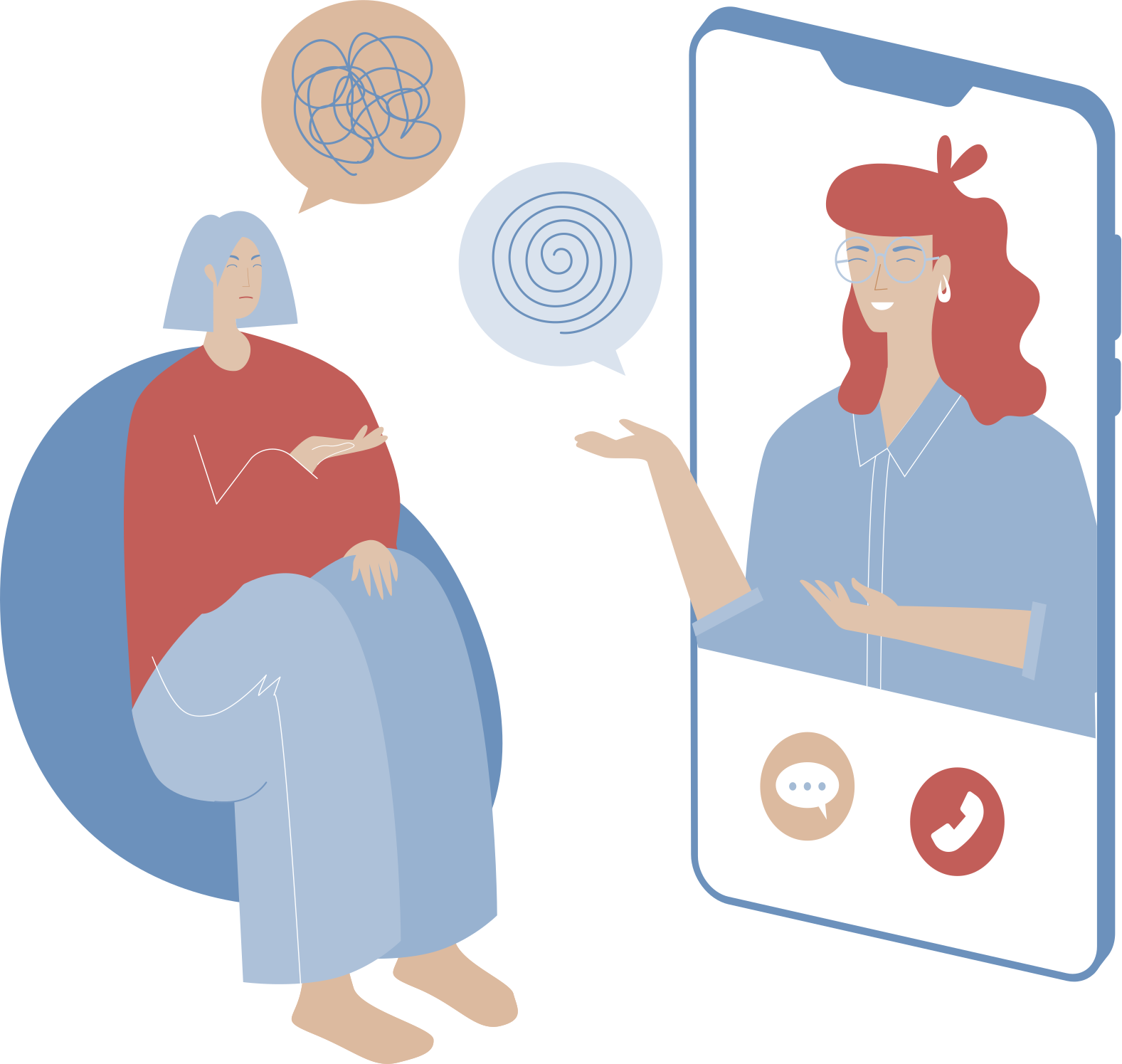
Virtual MindWell has therapists experienced in providing telehealth, ready to help with challenges you are experiencing.
1. Initial Intake & Goal Setting
We begin with a 15-minute consultation to understand your concerns, family dynamics, and what you hope to improve. This helps us match you with the right therapist and set meaningful goals from the start.
2. Comprehensive Assessment
Your therapist conducts a deeper assessment of communication patterns, stress triggers, your child’s emotional or behavioral needs, and any parenting challenges. This allows us to create a targeted, evidence-based plan for your family.
3. Personalized Treatment Plan
Together, you and your therapist develop a structured plan using modalities such as CBT, DBT-informed strategies, PCIT techniques, and parent coaching. You’ll learn practical skills for managing conflict, supporting emotional regulation, and strengthening connection.
4. Skill Building & Integration at Home
Each session focuses on applying skills in real-life situations—whether improving communication, responding to behavior, or managing your own stress. Parents learn strategies they can immediately practice between sessions for faster, more consistent progress.
5. Ongoing Support, Adjustments & Follow-Up
As your family grows, we refine the approach and adjust strategies as needed. Some parents choose additional support such as teletherapy check-ins, group sessions, or therapy intensives for accelerated progress.
Online therapy helps with anxiety by teaching coping tools to reduce worry, panic symptoms, and avoidance behaviors. Therapists often use CBT and DBT-informed strategies to identify anxious thought patterns, build emotional regulation skills, and practice real-life strategies between sessions.
With consistent practice, many people feel calmer, more confident, and better able to manage triggers.
Online therapy supports depression treatment by addressing negative thinking patterns, low motivation, and emotional withdrawal. Evidence-based care focuses on practical skills such as behavioral activation, mood tracking, and healthier routines to improve daily functioning and wellbeing.
Many clients notice changes as they build small, sustainable steps that restore energy and engagement.
Virtual MindWell treats adults with a wide range of challenges including but not limited to:
Our specialists are here to help adults managing a variety of challenges, such as anxiety, obsessive compulsive disorder, depression, stress, life transitions, low self-esteem, and more. If you are interested in going to therapy but are hindered by a tight work schedule, lack of childcare, or long commute, telehealth could work well for you. Although our New York City office is our home, we are working to meet the needs of our clients by providing virtual therapy throughout New York State.
Research has shown that telehealth is an effective kind of treatment and that therapy delivered by video and phone works for depression, anxiety and adjustment disorder (APA, 2020; Varker, 2019). Given the benefits and effectiveness of telehealth, it is likely that more and more clinicians will start to offer this service; however, it is important to work with therapists who have practice and experience working online.
Safety, Access & Teletherapy Use Centers for Disease Control and Prevention (CDC). “Mental Health Care and Telehealth,” 2023.
https://www.cdc.gov/nchs/covid19/pulse/mental-health-care.htm